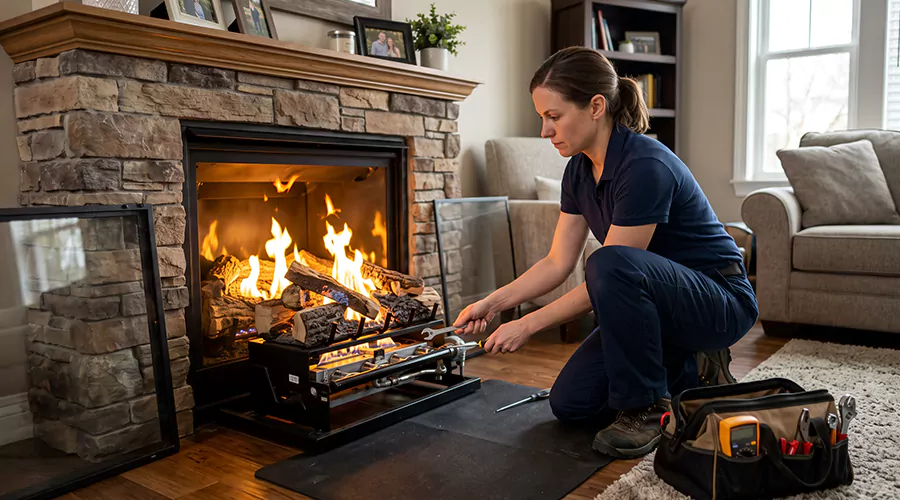
How Often Should a Gas Fireplace Be Serviced?
Discover the benefits of routine gas fireplace maintenance, from cleaning burners and checking vents to identifying worn parts and preventing costly breakdowns.




Based on 500+ Reviews

Proudly American
Owned & Operated

A gas fireplace provides convenient heat and comfort, but regular servicing is important to keep it operating safely, efficiently, and reliably. Over time, dust, debris, worn components, and ventilation issues can affect how a gas fireplace performs.
Most gas fireplaces should be inspected and serviced regularly to identify potential problems before they become major repairs. Proper maintenance can help improve efficiency, maintain clean flames, and ensure that safety components are working correctly. If you're considering replacing an outdated unit or adding a new gas fireplace, new fireplace installation can provide a modern and efficient heating option.
Most gas fireplaces should be serviced at least once a year.
Annual service is commonly recommended because a yearly inspection can help:
The best service schedule may vary depending on:
Although gas fireplaces require less maintenance than wood-burning fireplaces, they still contain mechanical and gas components that need attention.
Regular servicing helps prevent:
A properly maintained gas fireplace is more likely to operate efficiently and safely.
A professional gas fireplace service may include:
The burner is checked for:
Cleaning the burner helps maintain proper gas and air mixing.
A technician checks the flame pattern to make sure it appears normal. If the fireplace shows signs of wear, damage, or outdated components, fireplace restoration may help improve its condition, appearance, and functionality.
They look for:
A yellow or irregular flame may indicate an issue that needs attention.
Gas connections are checked for:
Proper gas connections are important for safe fireplace operation.
The pilot system is checked to ensure it:
Pilot problems are a common reason gas fireplaces fail to start.
Proper ventilation is essential for gas fireplace safety.
The service may include checking:
Blocked or damaged vents can affect combustion.
Service may include cleaning:
Clean components can improve appearance and performance.
While annual service is a common recommendation, some fireplaces may need more frequent attention.
A fireplace used regularly throughout the heating season may require more maintenance because of increased operation.
Older units may need more frequent inspections because components can wear out over time.
Potential issues include:
A fireplace should be serviced sooner if you notice:
Fireplaces exposed to:
may require additional maintenance.
You should schedule service if you notice:
A mostly yellow flame may indicate combustion or airflow problems.
A gas odor may indicate a leak and requires immediate attention.
Possible causes include:
A failing pilot system may require inspection or replacement.
Gas fireplaces should not produce heavy soot.
Soot may indicate:
Sounds such as:
may indicate a component problem.
Homeowners can perform basic maintenance tasks, such as:
However, gas fireplace servicing involving:
should be handled by a qualified professional.
Incorrect adjustments can affect fireplace safety.
Skipping regular maintenance can increase the chance of:
Small issues may become more expensive repairs if they are ignored.
Homeowners can help maintain their fireplace by:
Regular observation helps identify problems early.
Service is preventive maintenance, while repair addresses an existing problem.
| Service Includes | Repair Includes |
|---|---|
| Cleaning | Replacing damaged parts |
| Inspection | Fixing ignition problems |
| Testing | Repairing gas components |
| Minor adjustments | Correcting vent issues |
Regular service can help reduce the need for major repairs.
Stop using the fireplace and request inspection if you notice:
These signs may indicate a problem requiring immediate attention.
A gas fireplace should generally be serviced once a year to help maintain safe and efficient operation. Regular inspections allow problems with burners, gas connections, ignition systems, and ventilation to be identified before they lead to larger issues.
Annual maintenance, combined with proper care between services, helps improve fireplace performance, extend equipment life, and provide reliable heat when needed.
Most gas fireplaces should be serviced once a year to check safety components, burners, ventilation, and overall operation.
Yes. Regular maintenance helps identify hidden problems before they affect performance or safety.
Service typically includes cleaning, burner inspection, flame testing, gas connection checks, and vent inspection.
Basic cleaning is possible, but gas components should be inspected and serviced by qualified professionals.
Warning signs include yellow flames, unusual odors, soot, ignition problems, weak heat, and strange noises.
Annual service helps maintain safe operation and allows potential problems to be identified early.
Discover the benefits of routine gas fireplace maintenance, from cleaning burners and checking vents to identifying worn parts and preventing costly breakdowns.
